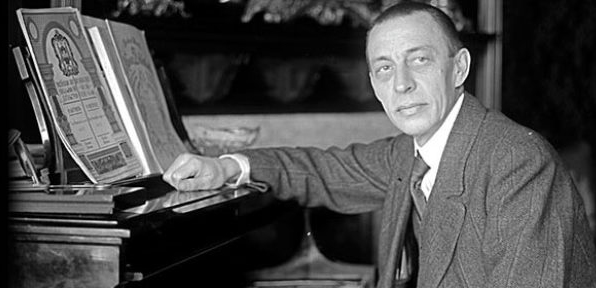
Moscow, Russia
Assembly of the Nobility, Small Hall
Symphony in B minor, first movement
Conus
Variations on a Theme by Haydn (version for two pianos)
Brahms
Samuelson and Presman, pianos
Terzettino from 'Così fan tutte'
Mozart
L. Laub, E. Barsova, V. Ostrovsky
Chaconne for solo violin
Bach
E. Titsman
Concertino for clarinet
Weber
M. Dyshman
Lensky's aria from 'Eugene Onegin'
Tchaikovsky
A. Serebryakov
Andante and Scherzo for String Orchestra
Rachmaninoff
Arrangement of movements from the First String Quartet
Concerto for piano in F minor, first movement
Henselt
Scriabin, piano
Chorus of Good Spirits, from 'The Tale of the Stone Guest'
Koreshchenko
Choir and orchestra
Aria from 'Mignon'
Thomas
N. Sokolova
Elegy for harp
Godefroid
V. Safronov
Concerto for piano in D minor, first movement
Rubinstein
Rachmaninoff, piano
Allegro de concert for violin and orchestra
Bazzini
A. Pechnikov
Aria from 'A Life for the Tsar'
Glinka
V. Tsvetkov
Fantasy 'Ruins of Athens'
Beethoven-Liszt
E. Ion
Student orchestra. Vasily Safonov, conductor. Sergei Rachmaninoff and Alexander Scriabin, piano. Samuelson and Presman, piano.
Rachmaninoff's role
Concerto Soloist
Notes
Satina indicated that this was a student concert ‘for the benefit of the needy students’. Threlfall and Norris listed a performance of Rachmaninoff’s Deus Meus also on this date with the composer conducting, as did Martyn (p. 532), yet this appears to be incorrect. Keldysh (p. 43), referencing a review in Moskovskiye Vedomosti, which is attached, noted praise for Rachmaninoff's contribution as both pianist and composer, not as a conductor. Keldysh further noted the Andante from Rachmaninoff's First String Quartet, arranged for string orchestra, was performed, along with works by Konyus and Koreshchenko. Keldysh previously raised doubt (p. 39) about the performance of Deus Meus under Rachmaninoff's baton at this concert, and on the basis of the detailed review - which does not refer to any choral works - it is presumed that the work was not performed. (Val'kova (vol. 1, p. 90) cites a press notice in Moskovskiye Vedomosti on February 19 which refers to a different work for choir and orchestra, indicating that a choir was present, perhaps allowing confusion to arise.) Val'kova also notes that the Scherzo by Rachmaninoff was announced in the press, presumably an orchestration of the other movement from the First String Quartet. A transcript of the complete program, as it appears here, is included in Ya. Ravicher's 1959 biography of Safonov (p. 268), and it indicates the Scherzo was also scheduled for performance. Antipov, in Creative Archive S.V. Rachmaninoff: Index of Works (2013, p. 6), notes that the manuscript of the First String Quartet in the Russian National Museum of Music includes an addition of a double bass part for performance by string orchestra, presumably of both the Andante and Scherzo movements. LoC, Sergei Rachmaninoff Archive, ML31.R33, Papers of Sophie Satin, boxes 82-89.